From Ecommerce to Shelf Space: How to Maximize Your Reach
 Share this article
Imagine if your product could reach 100 million people—that’s the estimated amount of traffic Walmart receives on a weekly basis. These shoppers are exposed to hundreds of brand impressions from a simple stroll through an aisle. And with only one third of in-store purchases being pre-planned, product placement and shelf space is crucial in enticing shoppers to buy.
Transitioning from ecommerce to conventional stores can be challenging, especially if you’re entering the market blindly. While ecommerce focuses on carrying out the purchasing decision with screen-to-face interactions and electronic transactions, traditional commerce has the advantage of face-to-face interaction and instant delivery of goods for the customer.
“Consumers are engaging with brands through multiple touch points, from in-store to online and social media. Building a strong omni-channel marketing strategy is the key to success for a seamless shopping experience in today’s CPG world.” says Heather Glenn, evok’s CPG category captain. “Brick-and- mortar stores are not a thing of the past, and can actually provide many benefits to your business.”
There are a few things to be mindful of when expanding your shop from online to in store. Each product’s sales depend on its retailer, store location, category and other factors. But negotiating proper shelf space at your next retailer can single-handedly be the golden ticket to getting your product from the shelf to the register.


How Does Shelf Space Work?
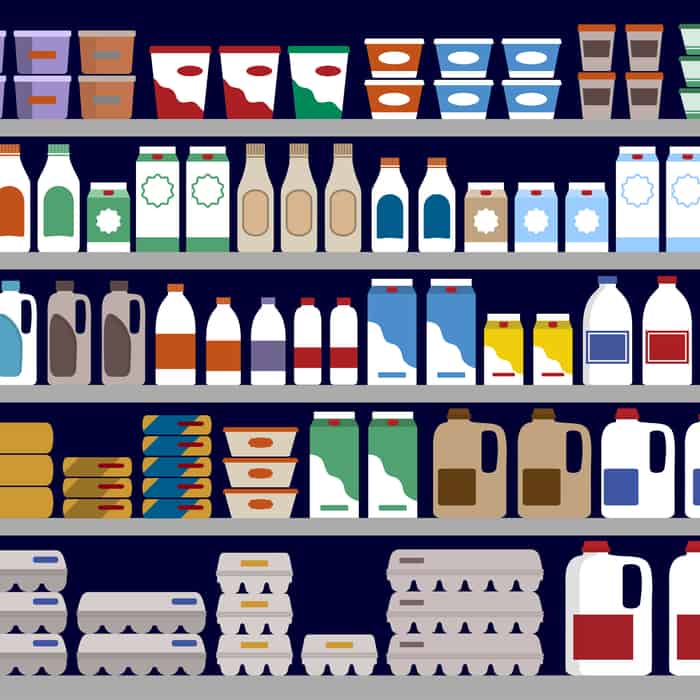
A product that soars in online sales can reflect these results on the shelves if the right tactics are implemented. So, before you throw all your money into allocating fees, it’s important to understand how shelf space works. Retailers organize shelves into four vertical shelf zones based off profit margins and turnover rates: stretch level, eye level, touch level and stoop level. The higher the numbers in profit margins and turnover rates, the better the chance your product secures a home at eye-level, receiving 35% greater attention than any other shelf. A planogram is used during the process as a visual merchandising tool to methodize a how each shelf is laid out for maximum sales. Retailers hire specialists to best present products to customers with the given shelf space, factoring in consumer behavior toward products, including interactivity.Once manufacturers have a grasp of the system, they still need to jockey for position on increasingly crowded shelves. To maximize your chances, it helps to prepare your product presentation before filing the first application for shelf space.Make your product packaging unique
As the single greatest media vehicle, product packaging has been known as a brand’s most valuable resource. Nearly 93% of the purchasing decision lies within the visual factor and the experience those visuals create. As a face-to-face introduction to your product, your customer should feel a connection with your brand from the second it’s lifted off the shelves. Customers want to touch, feel and interact with a product before buying it, and the products with higher interactivity will earn the most accessible spots on the shelves. From a compelling structure to the colors that reflect your brand, your packaging should convey a story from the moment a customer’s eyes meet your product. Once you have that customer’s attention, then it’s time to convince them why it’s a steal amongst your competitors.Choose the right packaging size
Bigger is not always better. In the ecommerce world, inventory is a number and digital “shelf space” is infinite. But preparing your product for presentation means it needs to do more than just look pretty—it needs to offer convenience for retailers and consumers alike. Your product will sit on the back burner, or in this case, the bottom shelf if it can’t be supported at an eye-level zone. Odd shapes and complicated packaging are not only difficult for shipping, but also for aligning with its neighboring products, making it an underdog in the running for space. Keep your product packaging lightweight, minimal and easily stackable.
Help stores reach their goals
Being an expert on your product means having the knowledge to convince retailers what makes your item valuable and successful in their stores. According to a PCR survey, when asked to rank merchandiser support on a scale of 1 to 10, retailers only gave a 6.4 ranking. Merchandisers who offer assistance to retailers through every step of the business cycle have a higher likelihood to not only secure shelf space but score an optimal location.Back it up with big data
Retailers have one question in mind when they’re packing their shelves: which brand will make the most sales? Piggybacking off helping stores reach their goals, you’ll need data to back up any claims about your product. In a sea full of competitors, your product has a duty to showcase its past popularity amongst consumers to earn premium shelf space. Collect data on your product’s revenue. Include the most effective marketing strategies and a comparison of statistics against competitors. If you can help retailers reach their bottom line, then your product is already working its way up the shelves.Taking Your Product from Shelf to Checkout
Prepping your product for brick-and-mortar takes a few extra steps in order to execute successfully. Your customers are ready to browse the shelves with their eyes instead of scrolling the web with their fingers. Their first impression should be a lasting impression, as purchasing decisions are made in just 8 seconds. While ecommerce allows your product to thrive in an independent web store, traditional commerce will have your product competing against its shelf neighbors, fighting for the same attention. Shopper behavior and retail environments are evolving, and the fight to win shelf space is rising. From brand planning to strategy, your end product should work as its own salesman. Brands that carry a good grasp on their desired retailer should understand what it takes to sell at their target store. Whether it consistently outsells its competitors or it offers something unique, those that execute a plan before pitching to a retailer can watch sales grow anywhere from 5% to 15% each year. But snagging a good spot on the shelf doesn’t mean you’ve secured it. Stay in tune with the shift in consumer behaviors and keep a grasp on where your competitors stand so you maintain the winning title on the shelf space battle-ground.Destination marketing in practice

The Orlando Marriott Lake Mary approached our team with two key goals: to promote the rebrand of their onsite dining...

A premier seafood retailer in Central Maryland, Lighthouse Seafood and Deli has established itself as a purveyor of quality, fresh...
MORE DESTINATION MARKETING INSIGHTS

Posted on
October 19th, 2023

Posted on
July 14th, 2023