
How Weather-Targeted Ads Are Changing the Restaurant Industry
 Share this article
Weather’s Impact on Restaurant Sales
What was once the topic of small talk is now one of the biggest influences on consumer behavior—the weather. It wasn’t until recently that weather came to the forefront as a tool to predict purchasing patterns, but it’s already proven how impactful it can be to the food industry. More than 90% of restaurant operators indicate that weather influences customer counts, which influence sales. After all, weather not only impacts what we eat, but also how much we eat. A study by the journal Nature found that people consume an average of 86 more calories per day in the Fall compared to Spring. As Winter months spike purchases of comfort foods such as soups, baked goods and warm dishes, Summer months increase desire for light, water-based foods like fresh fruits and salads.“Targeting by weather allows restaurants to optimize their impressions while drawing in consumers to exactly what they’re craving most, rain or shine,” shares Carly Laskey, Account Supervisor at evok.
Restaurant owners are digging into the weather dataset to revolutionize their digital marketing strategies with the help of artificial intelligence (AI). The growth of this weather-targeting technology allows ad campaigns to become more personalized and better educated to target customers at the right time and place. This can be achieved using one of the three weather-responsive campaign strategies, as follows: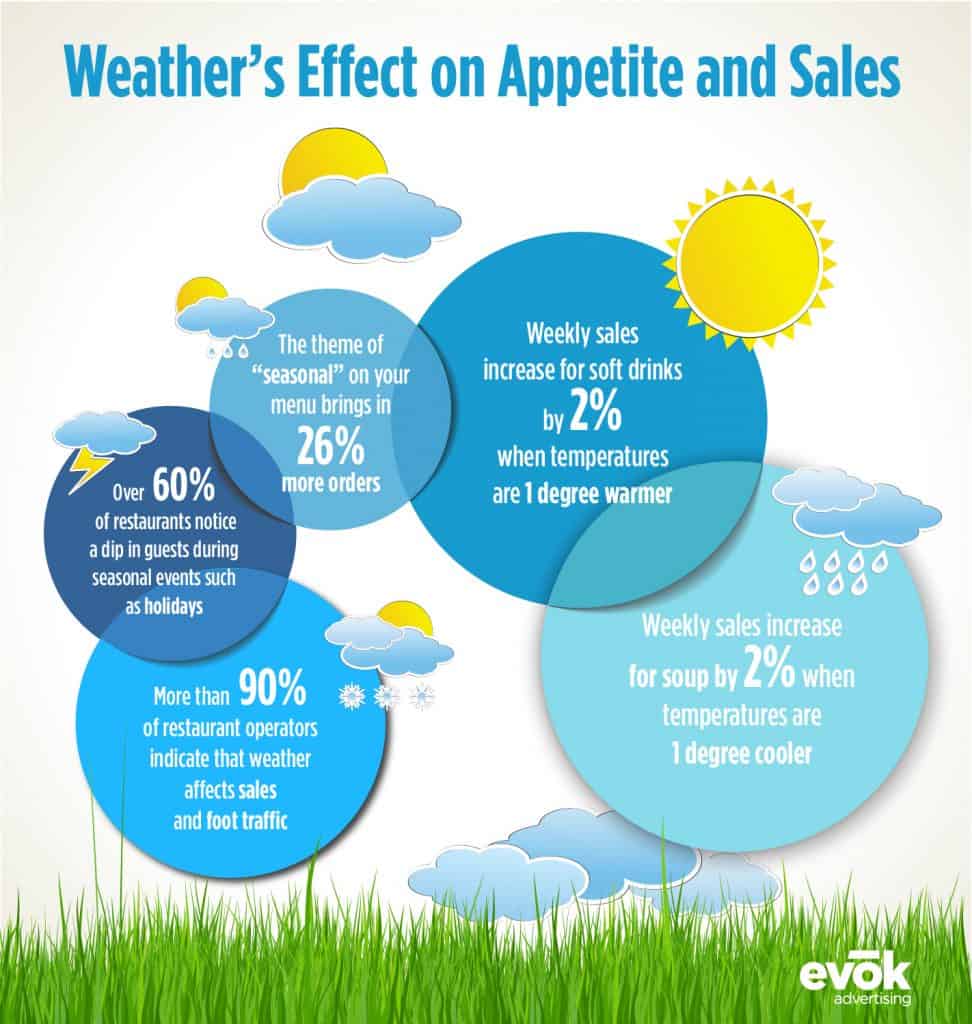
Weather-Responsive Campaign Strategies
There are three primary strategies to consider when developing a weather-responsive marketing campaign for your restaurant. By understanding previous weather patterns and the current forecast, a restaurant owner can determine what will resonate with his/her target customers in a real-time setting.Targeting by weather signal
Weather signals are visual signals that give information about predicted temperature or weather patterns. Customers are only targeted with weather-signal ads when temperatures or weather patterns reach a certain threshold. In this case, the customer is usually unaware that weather is being used for targeting. Weather-signal usage in ads lays the foundation for all weather-targeted campaigns.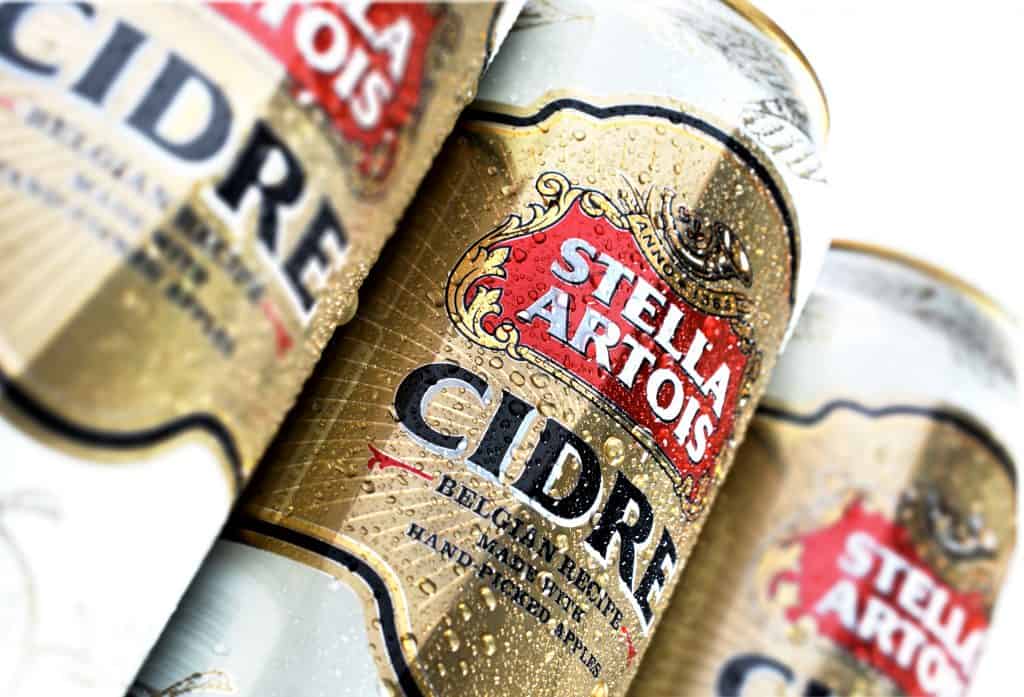 Stella Cidre used this strategy with an out-of-home ad at a bus shelter. The digital billboard, equipped with sensors, would only showcase the Stella Cidre ad when temperatures exceeded a specific threshold. In this case, it was if temperatures increased 2 degrees Celsius above the national average and there was no rain. In result, Stella saw a 65% increase in YOY sales during the period they ran this campaign.
Targeting by contextualizing
Acknowledging weather patterns in your restaurant ad with context is an approach that digs deeper than the sole use of weather signals. The targeting by contextualizing strategy personalizes a narrative around the product push, with real-time weather conditions. It goes a step further by using persuasive copy to entice the sale.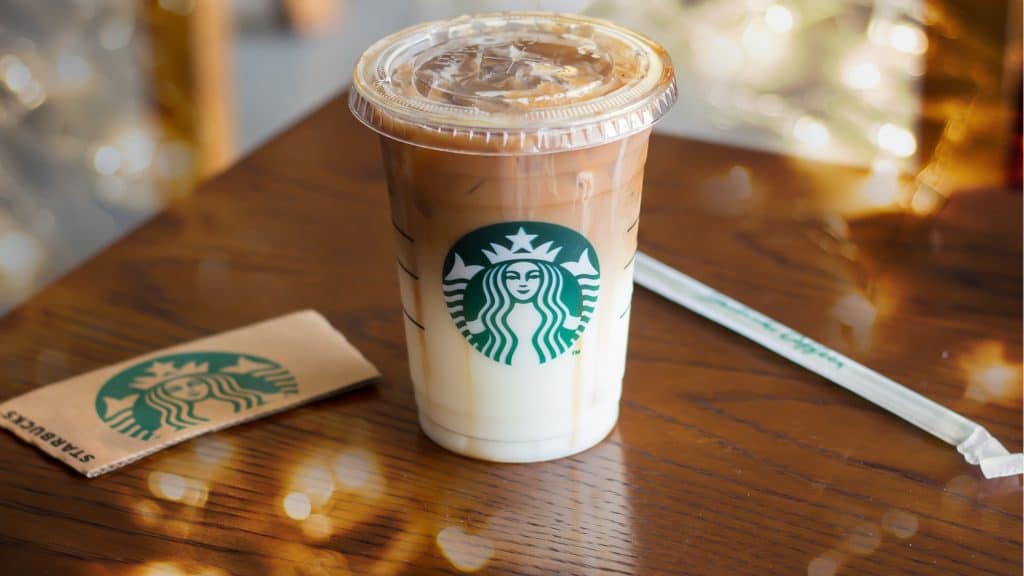 Starbucks demonstrated context-based targeting approach with a weather-triggered email campaign. They compiled data of what drinks are most popular during which season and used weather patterns to increase conversions. The email, displaying their popular summer drink—iced caramel macchiatos—read, “It’s a warm one today. Come in and cool off at Starbucks.”
Targeting by value-adding
Adding value and reasoning for the customer’s purchase based on weather conditions, this approach is arguably the most compelling of the three strategies we’re discussing today. Tailored creative, along with value-adding content, like a discount offer, can be enough to motivate a consumer and justify their desire for the purchase.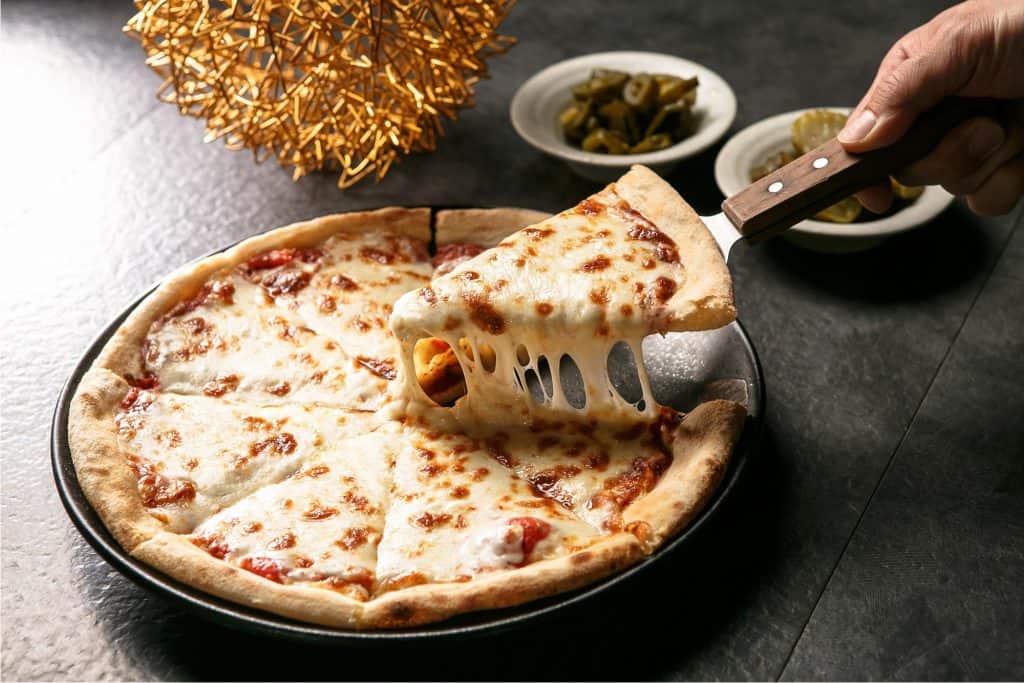 Spin! Pizza incorporated the value-adding content of “crummy weather” to their discount coupons through social media during the winter months, and in turn achieved a 20% increase in foot traffic.
Using Third-Party Services for Weather Targeting
Third-party services such as AdWords allow you to strategically display your ad only if it aligns with the set guidelines you apply to it. These guidelines can be measured by temperature, rainfall, snowfall, wind speed, humidity and more. The rules are applied and prompted based on global weather data of past, current and forecast conditions. Pete’s Café and Bakery used AdWords for weather-targeted mobile ads to promote their soups, salads and sandwiches. When temperatures dropped below 60 degrees, the café would promote hot soups. If temperatures reached above 60 degrees, their creative would display salads and sandwiches. As a result the restaurant saw a 124% increase in foot traffic during lunch hours.What Weather-Targeted Campaigns Means for Your Restaurant
Food cravings change with the seasons, but one thing that remains the same is the need for weather datasets to craft powerful marketing strategies. Personalized ads based on local weather patterns will yield higher performing click-through and conversion rates, as well as increased foot traffic and guest counts. “We can’t control the weather, but we can use dynamic digital technology to maximize our opportunities to reach individuals,” points out Stewart Hill, evok’s VP of Strategic Planning. “Personal preferences and flexible menu choices can be maximized based off how it resonates with the season and prevailing conditions―giving us a jump on the competition.”Destination marketing in practice

The Orlando Marriott Lake Mary approached our team with two key goals: to promote the rebrand of their onsite dining...

Elizabeth City is a charming, waterfront destination on the Albemarle Sound in northeast North Carolina. With a new Executive Director...
MORE DESTINATION MARKETING INSIGHTS